

What to Do When You Stop Feeling Attracted to Your Partner


Hi friend,
This week I heard a disgustingly fatphobic clip from Mel Robbins interviewing John and Julie Gottman, and I am PISSED.
If you don’t know who these people are, Mel Robbins is an annoying “white girl feminism”-style motivational speaker and author who I’m not a fan of…. so it’s really not a big surprise to me that her work wouldn’t click with me.
But John and Julie Gottman happen to be world-renowned clinical psychologists and relationship researchers progressive values I have admired for years, and whose research has profoundly influenced the way I think about healthy relationships, conflict, repair, friendship, trust, and long-term love.
The Gottmans are some of the few relationship experts whose work I recommend almost without hesitation, and I recommend their books to friends and clients all the time.
So imagine my surprise when I saw these normally brilliant, innovative, forward-thinking people saying such foolish and harmful nonsense about what to do when you stop finding your partner attractive!
Basically what happened is that Mel asked them a question that clients ask me all the time:
"What should you do if you stop feeling attracted to your partner? How do you tell them?"
This is a super common question that points to a super common (and painful) relationship experience. After all, long-term attraction can be complicated! Bodies change and age, relationship dynamics shift, and both desire and arousal can look very different as we get older.
I figured if anyone was going to offer a thoughtful, compassionate, and evidence-based answer to this frequently asked question, it would be the Gottmans. Unfortunately, however, their advice on this topic was absolutely appalling.
They focused on how to communicate this news gently and kindly, by starting with reassurance (“I love you so much,”) before introducing the concern from a place of vulnerability (“as you’ve gained weight, my sexual interest is going down”). They also suggested reminding your partner that your goal in bringing this up is to reconnect physically, and to frame the conversation around wanting a healthy future together instead of blaming them or being critical of their body.
Then they do a horrifying little role-play to give examples of this kind of reframe by saying you might invite your partner to go for walks or support them in reaching their health goals instead of telling them that they need to lose weight. And in the role-play, Julie said to her husband “since you’ve been gaining weight—since you’ve become more of a sphere than a triangle—my sexual interest has gone down.”
I just… what the fuck?! (I’m so mad again, just writing that out.)
Setting aside for a moment the gross and unnecessary way of talking about weight gain as going from a “triangle” to a “sphere,” this entire answer was wrong on every level.
For what it’s worth, if you didn’t really see anything wrong with this answer, you’re not alone.
On the surface, it may sound perfectly kind and reasonable to let your partner know how you’re feeling and encourage them to “get healthy” again—what’s wrong with that?
Well.. buckle up.
Because the thing is, this answer both reinforces a bunch of false assumptions about attraction itself, and upholds the whole oppressive and problematic belief system that our society is built around when it comes to bodies, weight, and appearance!!
The biggest assumption is that if you’ve stopped feeling attracted to your partner, then your partner must have become less attractive.
Think about it. There is absolutely no reason why you would ever need to have the kind of conversation with your partner that the Gottmans are recommending, unless you were essentially making a request, right? Basically, you’re telling them that you feel less attracted to them because they let themselves go or became uglier, and that you won’t be able to feel attracted to them again until (or unless) they make themselves hotter again.
And like… ok, this might make sense if your partner changed something specific physically that gets in the way of your attraction, assuming that it’s something that they actually have control over and can change back.
For example, if your partner shaves their beard and you suddenly notice your libido disappear, it might be worth letting them know what’s going on.
It should be stated, however, that most of the time, when we talk about “losing attraction to someone,” we’re not talking about small details that can be easily changed back.
Most of the time, when someone asks this question, they’re referring to changes and fluctuations in a person’s weight and appearance due to aging or other factors outside of our control. Which means that most of the time, they’re not just voicing a preference, they’re rejecting their partner’s humanity and projecting their own internalized fatphobia, ageism, misogyny, or ableism onto them.
Which is… not good.

But also, as I’ve written about many times before, attraction is not just physical or visual—it’s a lot more complex and interesting than the way a person looks, and it’s impacted by all kinds of other factors! So the vast majority of time, when one partner “loses attraction,” it’s actually not because their partner started to look less attractive.
Instead, it’s usually because of deeper and more important (but invisible) factors like betrayal, resentment, emotional distance, or a loss of trust or respect. Even when people think it’s about how their partner looks, when we’re talking about long term relationships, we’re almost always talking about something deeper going on.
Which makes it incredibly weird, unproductive, and disrespectful to ask your partner to address your problem by changing their appearance!
Because if your loss of attraction is actually about feeling like they’re checked out of the relationship, then it won’t matter one bit if they start working out and dressing better, because it was never about their appearance.
See why this is messed up advice? Why didn’t the Gottmans point this out, I wonder? Why didn’t they say “well most of the time a loss of attraction is really about deeper emotional things, so you’ll need to figure out what else is going on in the relationship, which is blocking attraction”?
With the advice they gave, a whole bunch of people are going to falsely assume their lack of attraction to their partner automatically means their partner became less attractive, and make requests that—if even possible for their partner to change—will absolutely backfire.
But honestly we’re still only skimming the surface for why their advice sucked, because now I want to talk about the fact that their guy answer supposes that their problem is their partner’s responsibility to solve.
And… just NO. Absolutely not.
Just like how our thoughts and emotions are our own responsibility, so too are our attractions and desires.
Think about it this way: if we want to have sex, but our partner doesn’t, it’s our own responsibility to handle that disappointment or whatever without putting any pressure or responsibility on them, right??
The same exact thing applies if we don’t want to have sex! If it bothers us that we feel less sexual desire for someone, that is our own problem to deal with, not theirs. And it would be just as wrong to place accountability on them for our desire in this situation as it would in the first one.

The idea that your partner’s desires are your responsibility (or vice versa) is actually a very problematic and dangerous idea that has done untold harm to women, and I will not stand for it now, just because it’s about the absence of desire, rather than the presence of it.
Also, this next critique deserves way more attention but I’m running out of time here so I just want to drop in the following issues with their answer:
It assumes that a person’s weight is in their control, and that if they’ve gained weight it must be due to lifestyle habits or laziness— which can and should be rectified by trying harder to take care of themselves.
It makes the false and stigmatizing assumption that weight and health are always correlated, which they are not.
It makes the false and stigmatizing assumption that attractiveness and weight are always correlated
The first one is absolutely absurd— many people gain weight for reasons that are absolutely outside of their control, including stress, trauma, medications, mental or physical health issues, hormonal changes, pregnancy, and perhaps the most common one of all: as a physiological response to dieting or trying to lose weight!
Assuming that if a person goes on more walks they will go from being a “sphere” to a “triangle” completely misunderstands pretty much everything we know about the human brain and body.
Also these assumptions all reinforce weight stigma, which is shown in the research to have seriously scary and dangerous consequences for the health and wellbeing of people of all sizes. Ok, now onto the important question: what would my answer to this question have been?
If someone came to me and asked, "how should I talk to my partner about losing my attraction for them," what would I tell them?
Well first of all, I would tell them that a loss of attraction almost certainly comes down to one of two things:
An emotional shift or block has occurred in the relationship, which your libido is responding to.
For example: a subtle breach of trust, mounting resentment, decreased emotional intimacy, or feeling less seen/supported/respected.
Your own internalized oppression around bodies.
For example: you’re projecting your own fatphobia, weight stigma, ageism, or ableism onto your partner.
Then I would help the person try to get clear on which factor was at play for them.
To explore the first factor, I'd want to know more about when and why their attraction changed.
When did they first notice it? What else was happening in the relationship around that time?
Had resentment been building, or trust been broken? Do they still admire their partner? Do they still feel emotionally connected? Do they still feel safe, seen, respected, celebrated, and cherished?
Depending on what they discover through this exploration, the person may indeed need to communicate their feelings and needs to their partner, and I would encourage them to do so in a way where their attraction is nothing more than a single data point, used for context rather than blame. (If it’s even mentioned at all.)
For example, instead of saying “I’ve stopped feeling attracted to you since you gained weight,” I might coach someone to say:
“I noticed that my interest in sex had been decreasing, so I got curious about what might be going on for me, and realized I’ve been carrying some resentment about how little time we’ve been able to spend together since you took your new job. I know you’re busy and tired, but I miss you and I’d really like us to have more date nights or other time where we just focus on each other.”
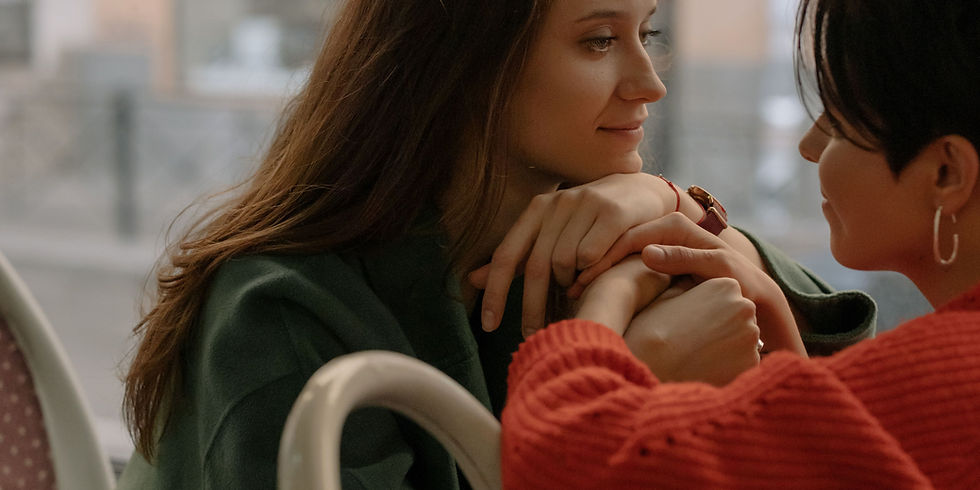
See the difference? One is about blaming your partner for becoming undesirable, the other is about opening up to your partner about what’s going on in your vulnerable inner world.
Of course, I'd also want to know what beliefs the person might be carrying about bodies, attraction, aging, fatness, disability, beauty, desirability, respect, and worthiness, to see how that second factor might be playing a role in their decreased desire.
But this is where I would have to be extremely clear with the person that judging your partner’s body is actually not a couple’s issue.
After all, we all grew up with the same false and oppressive biases about bodies, and none of us are to blame for having internalized those messages.
But we are responsible for noticing, examining, and dismantling them, and it is never ok to make it your partner's responsibility to compensate for your own internalized oppression.
Your partner is not responsible for catering to your own internalized biases about how bodies should look, and if those biases make you feel less attracted to them, that indicates that you have work to do as an individual, not as a couple.
Bodies change. Bodies age; gain and lose weight; get sick and injured; become disabled. Bodies carry us through pregnancies, surgeries, grief, stress, and entire lifetimes.
If your attraction to your long term partner decreases as those inevitable bodily changes unfold, they are not responsible for trying to look different, you are responsible for dismantling your negative or judgmental beliefs about these changes.
This is the only correct response, as far as I’m concerned:
Get curious about both the deeper emotional/relational factors that are blocking your attraction, and talk to your partner about them.
Get curious about the internalized oppression that you’re projecting on your partner, and go deal with that on your own.
No, this strategy doesn’t guarantee that you'll magically become attracted to your partner again. But because it places responsibility where it actually belongs, it’s both ethical and more likely to actually be productive.
Ultimately this is why I was so disappointed in the Gottmans’ answer.
They treated attractiveness like something that is objective, external, purely visual, and—worst of all—something that we “owe” to our partners.
In so doing, they reinforced some deeply harmful and oppressive ideas about bodies, worthiness, and relationship dynamics in general. And I think it’s incredibly telling (and depressing) about our deeply ingrained cultural biases about bodies that even these two brilliant people could get it so, so wrong.
What do you think? Have you ever wondered about this question, or been in this situation? Hit reply to let me know!
Big hug,
Jessi
PS. Curious to try coaching with me this summer? Hit reply or apply for it here!
Great and thoughtful post! Sometimes life gets busy and important dates can slip by, but a sincere gesture can still make someone feel remembered. Belated birthday greeting cards are a lovely way to share warm wishes even after the celebration, and Sendwishonline.com makes it easy to create and send a thoughtful digital greeting.
This is a thoughtful perspective on how attraction can be influenced by emotional connection, trust, and relationship dynamics. I especially appreciate the reminder to look beyond appearances and communicate with empathy. Just as get well soon cards can offer thoughtful support during difficult moments, honest and caring communication can also help people navigate challenging relationships.
This piece provides a fresh and compelling take on the subject. I appreciate the depth of research and clarity in your writing. sprunki game
Sprunki Game features a wide range of sounds, from energetic beats to atmospheric effects. This diversity gives players the freedom to create music in many different styles and moods.