

What Body Dysmorphia Looks Like, After 15 Years of Body Neutrality


Hi friend,
After 15 years of body neutrality work, body dysmorphia looks very different for me now, compared to how it used to look.
These days it’s very rare for me to get hit with a dysmorphic episode. But when I do, I recognize it immediately for what it is and can quickly identify (and speak directly to) the little monster under the mask.
Last week was one of those episodes—a week in which what I saw in the mirror looked suddenly and completely unrecognizable from what I was used to seeing—and the little monster was, very simply, heartbreak.
This weekend, a very close and treasured friend moved away, so all of last week we were doing a sort of friendship goodbye tour, and it was beautiful but also very painful.
My brain—ever the protective little monkey—wasn’t sure if me feeling all that pain was such a good idea, or indeed if I would even be able to handle it.
So it reached down into our shared history, looking for any strategy that might be useful to distract or protect me from unmanageable negative emotions, and it found the long-abandoned (but very well-built) neural pathways of body dysmorphia.
Back in the day—before I found body neutrality and when I was still deep in the grasp of self-objectification—body dysmorphia wasn’t an occasional episode, but rather a whole-ass way of life.
Every day I would look in the mirror and be surprised by what I saw. Would I be hot today, or gross? Would I be thin, or fat? Fit or flabby? Tight or puffy? Ugly or pretty?
It was like my brain was constantly flipping through a magical mystery tour of images, or a randomized funhouse mirror carousel, so that I had absolutely no idea how I actually looked to other people.

And none of my ever-changing perceptions were morally or emotionally neutral, either!
I was looking in the mirror not just to discover how I looked that day, but also to discover if I was worthy or unworthy; good or bad; desirable or undesirable; a failure or a success.
For years my mirror reflection was such an erratic and inconsistent crapshoot that I lacked any semblance of perspective on my size and appearance, and was completely unable to form a consistent (or even coherent) narrative about how I looked or where I “ranked” in terms of attractiveness, morality, and social status.
But somewhere along the body neutrality journey this changed, and I developed the ability to see a generally accurate, objective, consistent, and (most importantly) morally neutral version of myself in the mirror.
The day to day changes in what I saw shrank dramatically, and the whole picture clarified into something more or less uniform and dependable.
I notice changes of course. Like I can see when I gain or lose weight, or when my hair is getting more silver, but what I see in my mind now accurately mirrors what’s happening in real life… which is to say I see those changes taking place gradually over time, instead of bouncing around day to day.
I see myself for how I actually look now, nearly all the time.
That makes it incredibly notable when there’s an interruption to my body image.
It makes it really obvious when sometimes, seemingly out of nowhere, I look completely different from the day before.
I call these “dysmorphic episodes,” and while they used to be accompanied with a lot of negative beliefs (and huge waves of shame or dread or anxiety or disgust), they now come alone and just make things weird enough that I pay attention.
Because dysmorphic episodes only ever show up when something deeper is going on that needs my attention. Instead of being threatening or upsetting, I now think of these episodes as desperate little messengers, asking me to look inward and tend to myself.
Early last week I realized I was receiving such a message when I looked in the mirror and just… couldn’t really see myself at all.
Seemingly out of nowhere—but on the exact day that grief about my friend hit—my ability to make sense out of my appearance completely and totally disappeared.
I looked in the mirror and instead of seeing myself, I saw something very weird and very bad and very wrong.
It didn’t look “ugly” or anything. I didn’t look “fat,” or “old,” or any other morally loaded adjective that used to accompany these kinds of visual distortions.
I’ve dismantled and divested from our socially conditioned beliefs about bodies, beauty, and worthiness enough that those kinds of stories no longer make sense, even during a dysmorphic episode, for which I am incredibly grateful. It’s almost like the scaffolding of our old coping strategy is still there, but none of the equipment works. Like the tunnels still exist, but no trains are actually running.
Anyway, the picture my brain showed me that day just… wasn’t me.
It wasn’t even a human person, really. Instead, I saw something flowing and off-putting and amorphous, like I had no edges and all of me was spilling into everything else, and there was a very wobbly Alice in wonderland feeling to it all. It was alarming and uncomfortable in the way I imagine people might have felt when first encountering Picasso’s paintings. Looking at it gave me the same swoopy, scary feeling as if I was standing on the roof of a very high building and peeking over the edge.

I told my friends that my brain wanted me to think I looked like a shapeless scary amoeba in order to distract me from being sad. I even playfully tried to capture the “grief amoeba” in photos to show them, taking unflattering photos at odd angles in the hopes of showing them how vast and odd and nebulous my body had become.
Unsurprisingly though, the amoeba never showed up in the photos. That particular distortion belonged to my eyes and brain alone.
I’m telling you all this because I’m a body image coach who developed a uniquely effective method for overcoming body image issues, and because I view body neutrality both as an ongoing practice and as my default state.
And despite all this, I still get hit with body dysmorphia sometimes.
But the truth is that body dysmorphia doesn’t have to mean anything, either about our bodies or about our body image. When you’ve done the work to see yourself neutrally and clearly, sudden distortions don’t have to be scary or upsetting– they can just be morally neutral information.
I mean it’s not comfortable, and I certainly don’t enjoy it when it happens. But I recognize what’s happening, and that what’s happening is safe, so I also don’t have to freak out anymore.
Sometimes the brains just get scared for us. They want to help us and protect us, and they call upon whatever coping and distracting strategies they can think of to try to help, always calling upon the strategies that are most familiar, and have been the most effective in the past.
For me that means body dysmorphia; maybe it’s the same for you. Or maybe your brain calls upon something else, like binge eating, or self-harm, or addiction, or something else entirely!
Even after those strategies have been dismantled and debunked and fallen into disrepair… your brain will still reach for them in moments of overwhelming stress or distress. It will still reach for them when it feels like it’s normal skills and solutions aren’t working, or aren’t enough.
Which means the goal isn’t to never have body dysmorphia (or whatever strategy your brain uses to try to protect you) ever again.
The goal is to notice when it’s happening, and identify what’s underneath it that needs to be faced or felt… then do that until your brain feels safe again. When you do that, your brain calms down and the coping strategy fades away… so that all you’re left with is the truth of your own feelings, and a few days of the mirror being weird.
Anyway, here are some attempts to capture the grief amoeba on camera:
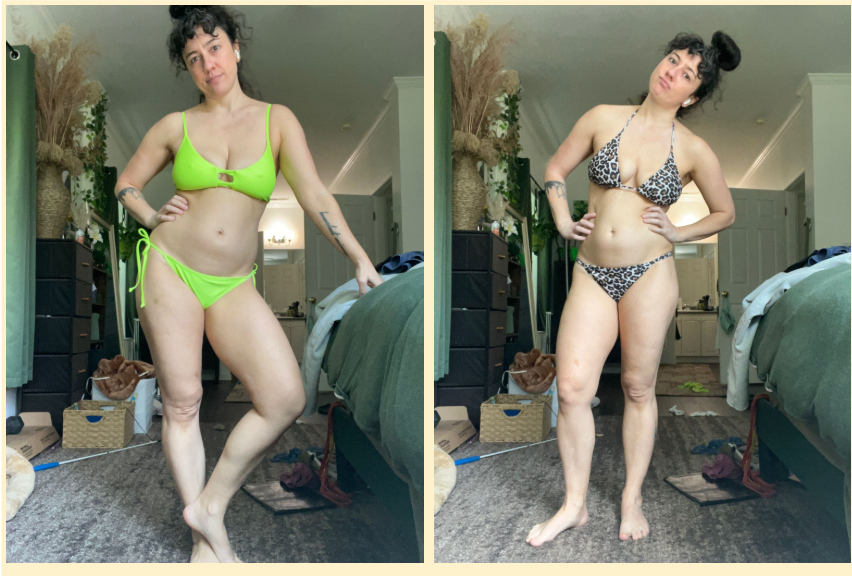
It’s gone now, and I look like a human person again.
A sad human person, perhaps, but a sad human person with normal human edges and boundaries.
Because that’s what happens when we’re willing to face and feel the things our brains say we cannot survive.
Big hug,
Jessi
PS. If you’re struggling with body dysmorphia or distress, I would love to help you this fall. Apply for coaching with me here, or hit reply for details.
被中介收了几千块「评估费」,结果自己两分钟就测出来了,答案一样。
Fragrance purchases can be surprisingly personal because the same scent may develop differently depending on the wearer and the concentration of the product. Notes, bottle size, ingredients, shipping conditions, and return rules are useful details to check before placing an order. Anyone needing help with an existing purchase can consider https://goda-perfume.pissedconsumer.com/customer-service.html when looking for customer-service information. For an unfamiliar fragrance, starting with a smaller size can also be a practical way to decide whether the scent is actually suitable before buying a larger bottle.
Body neutrality encourages individuals to value physical capability over aesthetic perfection, fostering a much healthier psychological relationship with exercise. Fitness enthusiasts reading Muscle Booster Workout Planner reviews often seek customizable routines that accommodate joint health and steady progress without promoting compulsive overtraining. Sustainable wellness practices help maintain lifelong strength while protecting mental peace.